
Cesarean Delivery
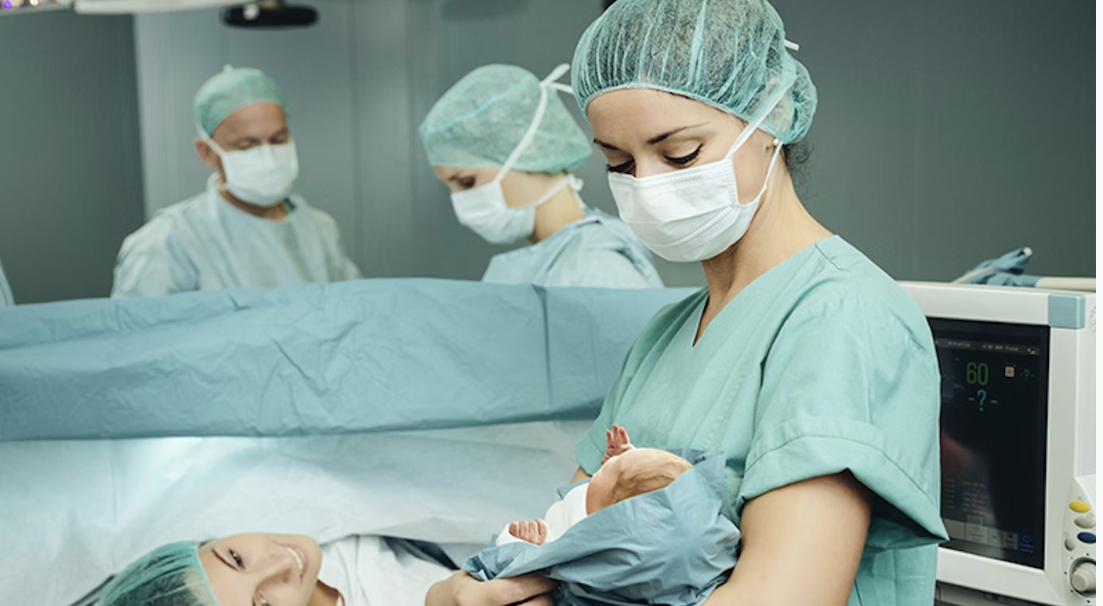
I know this can feel overwhelming. A caesarean birth, also called a C-section, is a safe surgery to deliver your baby through an incision in the tummy and womb when it is the best option for you or your baby. Some caesareans are planned, others are decided during Labor if circumstances change. Our goal is a calm, respectful experience, with clear explanations at every step.
Key points
- Common reasons include breech position, placenta problems, certain multiples, slow or stalled Labor, concerns about the baby’s well-being, or previous uterine surgery.
- Anesthesia is usually spinal or epidural; you are awake and pain-free. General anesthesia is used only when necessary.
- Antibiotics, a medicine to reduce bleeding, and leg compression or blood-thinning protection are given to lower risks.
- If you and the baby are well, skin-to-skin, delayed cord clamping, and early breastfeeding can begin in theatre or recovery.
- Most stitches are dissolvable. Soreness is expected; steady improvement over days and weeks is the usual pattern.
Evaluation and treatment: what to expect
- Before surgery, we review your history, check blood tests, confirm consent, and explain the plan. You will be told when to stop eating and drinking.
- In theatre, monitors are placed, anesthesia is given, and your tummy is cleaned. You may feel pressure or tugging, not pain. The baby is usually born within minutes; the whole operation often takes 40 to 60 minutes.
- After birth, the placenta is delivered, the womb is closed, and the skin is stitched. You move to recovery, where we watch your breathing, pulse, blood pressure, bleeding, and comfort.
- Pain control uses a mix of medicines so you can move, feed, and bond. Early gentle walking helps prevent clots and supports recovery. Feeding support is offered for breastfeeding, formula feeding, or both.
Emergency State?
In urgent situations, contact immediately for help.

Available 24 Hours
+123-234-1234
Get Your Free Health Consultation or Book Your Appointment Now
When to seek urgent care
Go to hospital or call emergency services now for heavy vaginal bleeding, fever 38°C or higher, severe headache or vision changes, chest pain or shortness of breath, one calf that is swollen, red, or painful, wound redness that spreads, pus, opening of the incision, severe belly pain, bad smelling discharge, or if baby movements stop or slow before a planned surgery.
Action plan
Pack essentials, ID, insurance, loose clothing, high waist underwear, maternity pads, baby items, and phone charger.
Watch for the urgent signs above and seek help early if worried.
Arrange help at home for the first one to two weeks, plan simple meals, and safe transport with a car seat
Book your appointment with a doctor to review your individual risks and benefits, anesthesia choices, skin-to-skin and feeding plans, recovery timeline, and options for future births.
Keep the incision clean and dry, take pain medicines as advised, and avoid heavy lifting and strenuous exercise until cleared.
Follow fasting instructions and medication guidance, do not shave the incision area, and shower the night before or morning of surgery.
FAQ -Cesarean Delivery
Frequently Asked Questions
These FAQs offer general information for patients. They do not replace medical advice. For urgent concerns, contact your local emergency number or visit the nearest emergency department.
Reasons can include concerns about the baby’s well-being, labor that has slowed or stopped, placenta previa, baby’s position, such as breech or transverse, multiples, or prior uterine surgery like a classical caesarean or myomectomy.
Most caesareans use a spinal or epidural, so you are awake and comfortable. General anesthesia is reserved for specific situations, for example, urgency or when a spinal or epidural is not suitable.
Many people stay in the hospital for two to four days. Soreness improves steadily. Most feel more like themselves by four to six weeks, though recovery varies. Gentle walking, good pain control, and rest help.
Often, yes, depending on your scar type and overall health in the next pregnancy. This is a shared decision made with your team when you are pregnant again.
If you and the baby are stable, we encourage skin-to-skin in theatre or recovery. If extra care is needed, we support bonding as soon as it is safe.
Drive only when you can move comfortably and safely perform an emergency stop. At first, lift nothing heavier than your baby. Stairs are fine with care; take them slowly.
Possible risks include infection, bleeding, blood clots, anesthesia reactions, and rare injury to nearby organs. Your team works to reduce these risks before, during, and after surgery.
You should not feel pain. Pressure and gentle pulling are common sensations. We will check in with you throughout and can give extra medicine if you are uncomfortable.
Usually yes. With a spinal or epidural, you may feel pressure or movement but not sharp pain. Tell us immediately if you feel discomfort so we can adjust.