
External Cephalic Version, Breech Turning
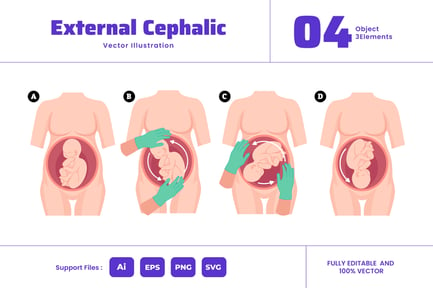
If your baby is breech after about 36 weeks, a gentle procedure called external cephalic version can often turn the baby to a head down position. A clinician places warm gel on your tummy and uses their hands, with ultrasound guidance, to help the baby roll into place. This increases the chance of a vaginal birth and reduces the need for a caesarean. Most people find it uncomfortable rather than painful, and it is safe for most pregnancies.
Key points
- Usually offered around 36 to 37 weeks, a little earlier or later in some situations.
- Works in about half of cases, more likely to work if you have had a baby before.
- A small injection to relax the womb is commonly used to improve success.
- Your baby is monitored before and after the attempt. Brief changes in the heartbeat are common and usually settle quickly.
- If your blood group is Rhesus negative, you will be offered an anti-D injection after the procedure.
- If turning is successful, the baby rarely returns to breech. If it does not work, you will discuss a birth plan, planned caesarean, or a carefully supported vaginal breech birth where appropriate.
Evaluation and treatment: what to expect
- We confirm the baby’s position with an ultrasound, check the placenta and fluid around the baby, review your history, and answer your questions.
- A monitor is placed on your tummy to record the baby’s heartbeat. A small injection may be given to relax the womb.
- With gentle, steady pressure, the clinician attempts to guide the baby into a head-down position. This may take several minutes and can be paused or stopped at any time.
- After the attempt, monitoring is repeated. If you are Rhesus negative, anti-D is given. You can usually go home the same day.
- If the first attempt is not successful, a second attempt may be offered on another day, and a birth plan is made that suits your situation.
Emergency State?
In urgent situations, contact immediately for help.

Available 24 Hours
+123-234-1234
Get Your Free Health Consultation or Book Your Appointment Now
When to seek urgent care
Seek immediate help if you have any of the following after an attempt to turn the baby: heavy bleeding, constant severe abdominal pain, your waters breaking, contractions that become regular and strong, or baby movements that stop or noticeably slow. If you have bleeding, water breaking, or severe pain before your appointment, call your maternity unit for advice.
Action Plan
Ask at your late pregnancy visits about your baby’s position and whether an external cephalic version is suitable for you.
Eat a light meal before your appointment, wear comfortable clothes, and arrange transport and support for the day.
After you go home, continue to monitor baby movements and follow the urgent care advice above if you notice any changes.
Book your appointment with a doctor to discuss the benefits and risks, pain relief options, what happens if the turn works, and your birth plan if the baby remains breech.
Focus on calm breathing during the procedure and let the team know if you need a pause.
FAQ - External Cephalic Version, Breech Turning
Frequently Asked Questions
These FAQs offer general information for patients. They do not replace medical advice. For urgent concerns, contact your local emergency number or visit the nearest emergency department.
A procedure to turn a breech baby to a head-down position through gentle pressure on the abdomen.
Usually at 36 to 37 weeks for first pregnancies, slightly earlier for later pregnancies.
It can be uncomfortable, and serious complications are uncommon, but the team monitors mother and baby throughout.
Success varies with fluid level, placental location, and parity; your doctor will estimate your chance.
We will discuss planned cesarean versus options for vaginal breech birth if appropriate and safe.